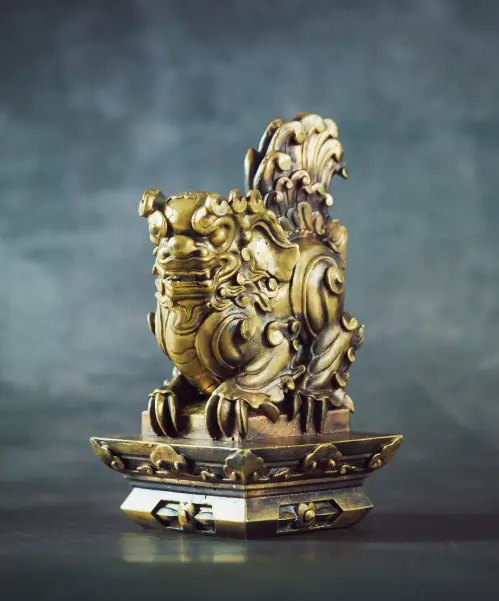
The Story of the Nghê Guardian Spirit at Văn Miếu – Quốc Tử Giám
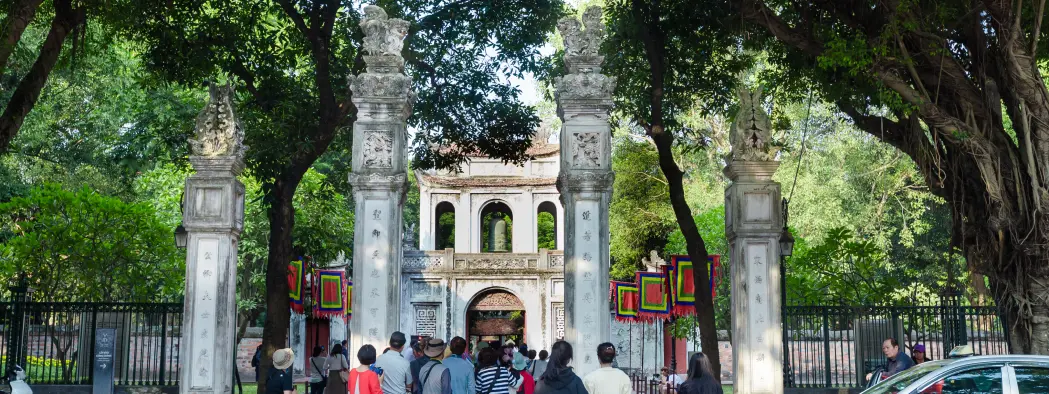
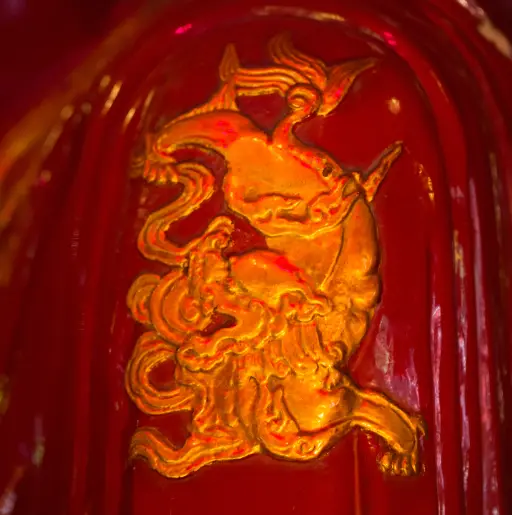
11 Centuries Guarding the Sacred Space of Văn Miếu – Quốc Tử Giám
The Nghê is a guardian spirit that has long been part of Vietnamese cultural life. Depending on the region and setting, the Nghê takes on different forms and meanings.
Before the Nguyễn dynasty, the Nghê usually knelt close to the ground, or appeared only as a decorative detail on gates, doors, and rooflines. It was not until the Nguyễn dynasty that the Nghê began appearing atop ceremonial pillars — a milestone that elevated its role as an arbiter, distinguishing right from wrong.
This research, blending technology with traditional culture, will be developed into “phygital” products, which will then be handed back to the community to keep spreading their meaning.
At Văn Miếu – Quốc Tử Giám, the image of the Nghê appears in many places: the Four Pillars of Quốc Tử Giám, the Doctoral Steles, the Đại Thành Gate, the robes of Confucius, and on the altar.
The Way is Like a Road — Find the Right Gate to Enter
The Way is like a road: if you find the right gate, you should enter.
To achieve success, one must give one's whole heart and strength; to pursue learning, one must endure a long and arduous path. The couplets praising the sages and offering moral guidance, carved onto the Four Pillars (the outer ceremonial gate) since ancient times, have always reminded scholars — those who diligently pursue Confucian learning — to become people of value to society and to the nation.
The pillars in front of ancient structures were built in the shape of lantern posts. Though time has passed and lighting technology has advanced — the cube-shaped “lantern” section is now a solid block, no longer holding a flame inside — these pillars remain a symbol of light, illuminating the way into sacred spaces.
This is also why the Nghê statues atop the pillars, with their large round eyes gazing downward, are among the most important symbols of this Confucian space. At the Văn Miếu in Hà Nội, a rare phenomenon occurs: the Nghê ranks higher than the Phượng (Phoenix). The Phượng represents grace and splendor and is usually placed on the two taller, central pillars, but at Văn Miếu, the two Phượng pillars stand on the outside.
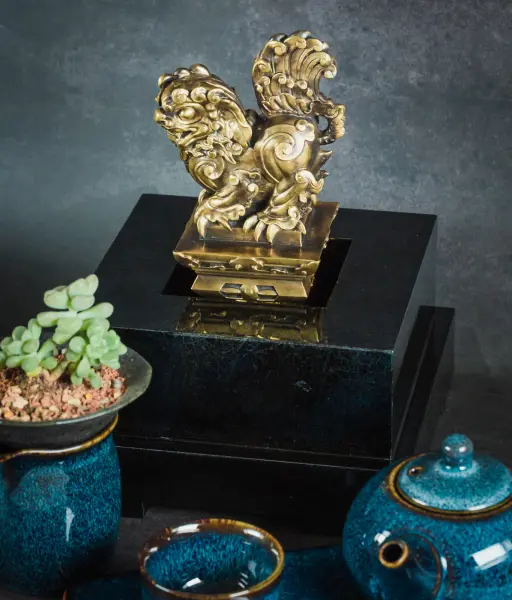
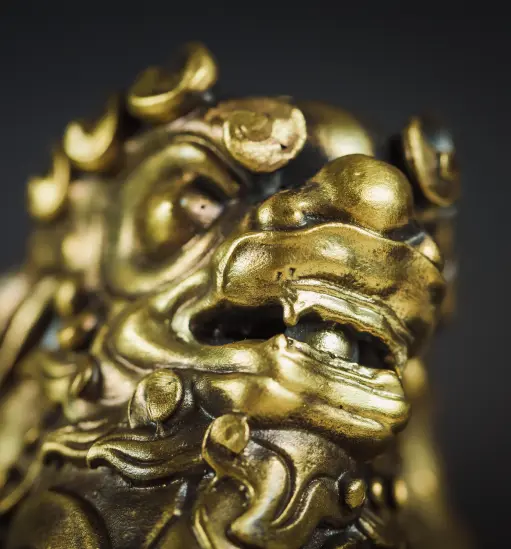
Nghê — A Symbol of Wisdom and Transparency
The Nghê of Văn Miếu, standing atop the lantern post, becomes a guardian spirit of light. Whether kneeling on either side of a gate or perched atop a lantern post, the Nghê has always been a spirit capable of judgment, of telling right from wrong. Here, standing high and looking down, the Nghê becomes a symbol of the light of wisdom and transparency.
Dishonesty in imperial examinations — and, in turn, the importance of academic integrity — has always been part of history. From the Later Lê dynasty onward, when examinations at Văn Miếu were held regularly and systematically (and when the system of doctoral steles we see at Văn Miếu today was established), major examination scandals also began to be recorded: candidates swapping exam papers or smuggling in prepared answers from outside; high-ranking officials buying scores for their children; examiners taking bribes and sabotaging talented candidates to favor opportunists.
Placing the pair of Nghê in the middle, raised higher, right at the main gate that every scholar must pass through, seems to be an absolute affirmation of the sanctity of this space — a place where academic integrity is the highest value.
The Power of the Nghê Stands with Those Who Believe in Real Ability
The Nghê at Văn Miếu thus becomes a symbol of a society that always upholds integrity. The image of the pair of Nghê perched on the lantern posts reflects a desire that has run throughout the nation's history — for fairness, for honoring genuine scholarship, and for seeking out talented people as the “vital force of the nation”.
The spirit of the Nghê at Văn Miếu therefore remains just as meaningful today, for the nation as well as for individuals and organizations. It remains a spirit of the sacred realm with supernatural powers that protect people, yet the Nghê does not grant “wealth and fortune” without reason: its power stands alongside those who believe in real ability.